The AI Ponzi Scheme: Slap on a Chatbot, Raise Millions, Leave Engineers Holding the Bag

 Written by:
Tihomir Babic
Everyone's chasing AI riches, but when the bubble bursts, engineers, not investors, will be left cleaning up the mess.
If you're a data scientist or ML engineer, answer this honestly: “Is AI making your job easier or making life dumb and boring?” Honestly, I'd go with the latter. Our job is now a wrapper for another wrapper that wraps a prompt. That's annoying.
But slapping AI on everything and raising a $15 million seed round, that's loco! Yep. Welcome to the AI bubble – and no, you're not ready for the crash.
How to Spot the Bulls**t
This isn't the first time tech's gotten high on its own buzzwords. In 2000, slapping “.com” on your company was a growth strategy.
Today? Just say “MCP agentic LLM integration with zero-shot chaining.” Boom – 12 million series A. The pattern is the same.
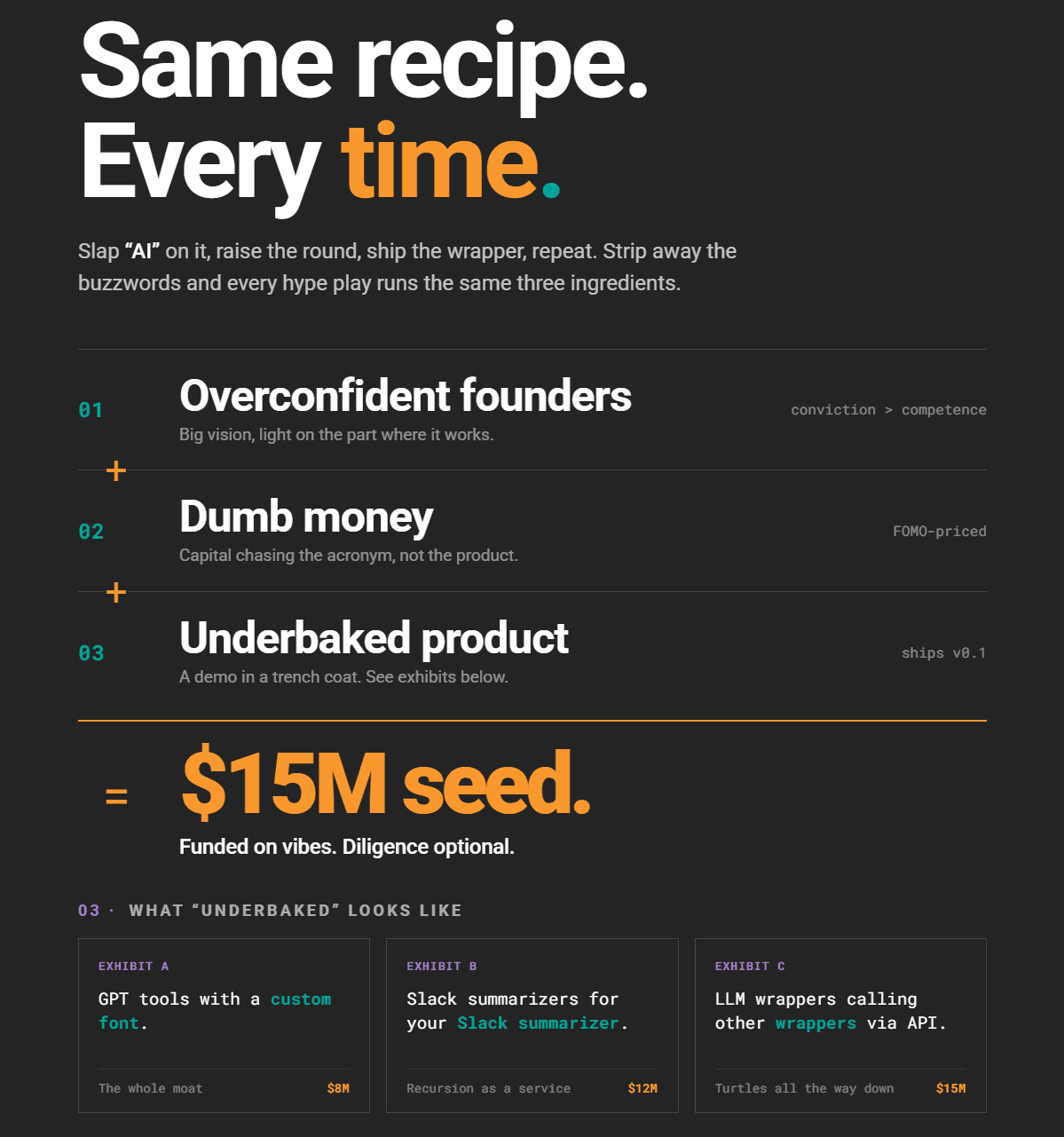
How sweet. Meanwhile, data scientists are drowning in ghost dashboards, and prompt engineers are debating whether “please” improves model accuracy. Even the AI engineers are starting to ask if we've gone too far. We're heading for a crash, not because AI sucks. It's because most of what we're doing with it sucks.
The Correction is Coming
There are signs that the correction is coming. AI takes 58% of global venture capital. There's a strong FOMO feeling here. Everybody's investing in AI for fear of somebody else winning the market. The surge of funding into a concentrated segment means other sectors are starving. Expect cutbacks, pivots, and stealth layoffs as capital dries up for anything non-AI.
The global monthly funding to AI companies peaked at $184.6 billion in February 2026, then fell to $22.1 billion in March, before rising again to $36.9 billion in April.
These are extreme changes. It’s also worth noting that 60% of that capital is going to 5 companies.
All that means there will be a lot of losers, and maybe there already are. A sentiment shared by Nnamdi Okike, the founder of the 645 ventures: “A lot of VC funds are just kind of saying, ‘Hey, this can only go up.’ And that’s usually a recipe for failure—when that starts to happen, you’re becoming detached from reality.”
Some rich people not getting even richer? I don’t give a s**t. The real losers will be somewhat lower down the chain. Namely, us.
What Actually Survives
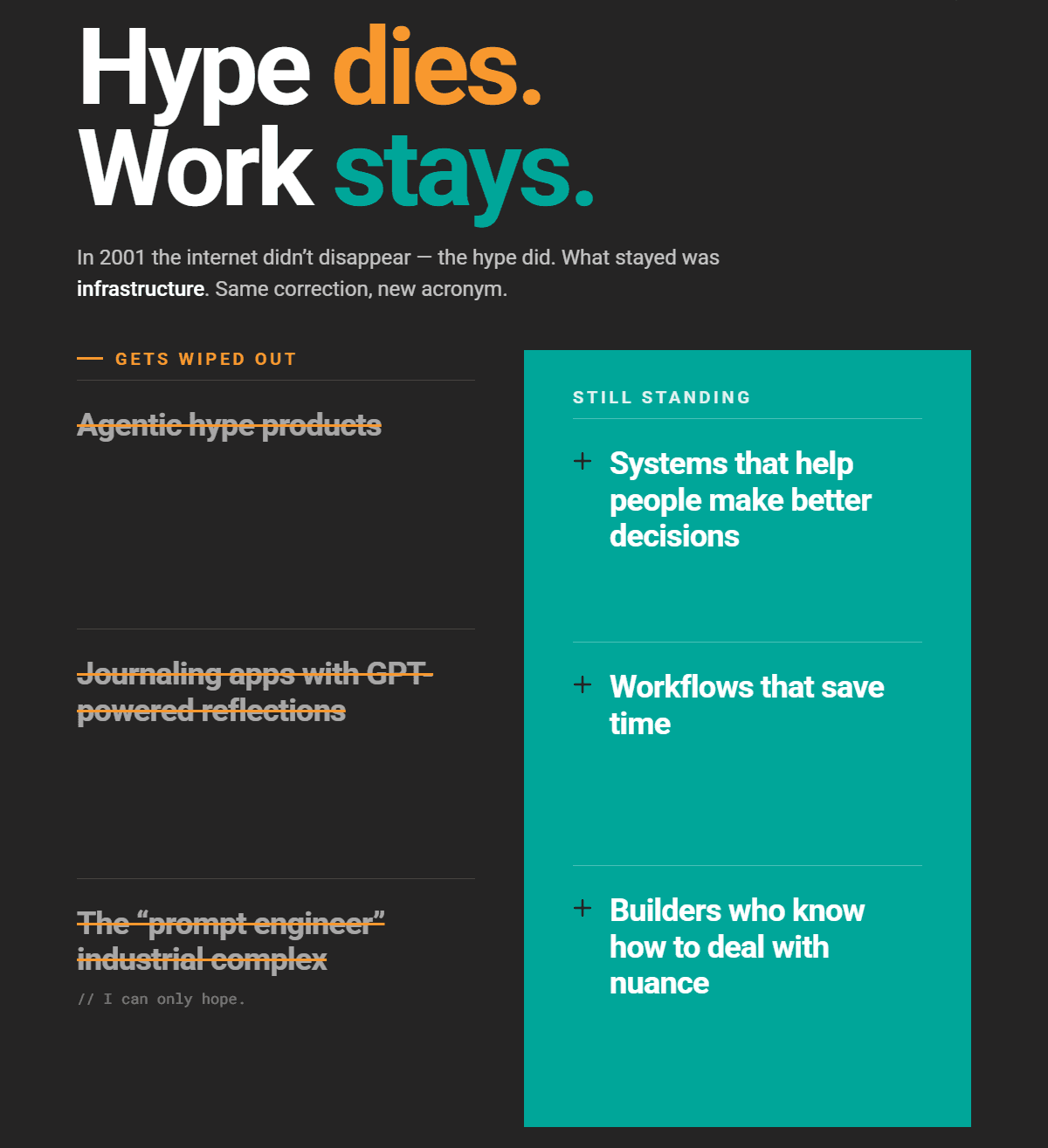
We can only hope that what's useful will survive. In 2001, the internet didn't disappear. The hype did. And the stuff that stayed was infrastructure.
What we’ll lose, and what we’ll keep this time?
So, you have two options:
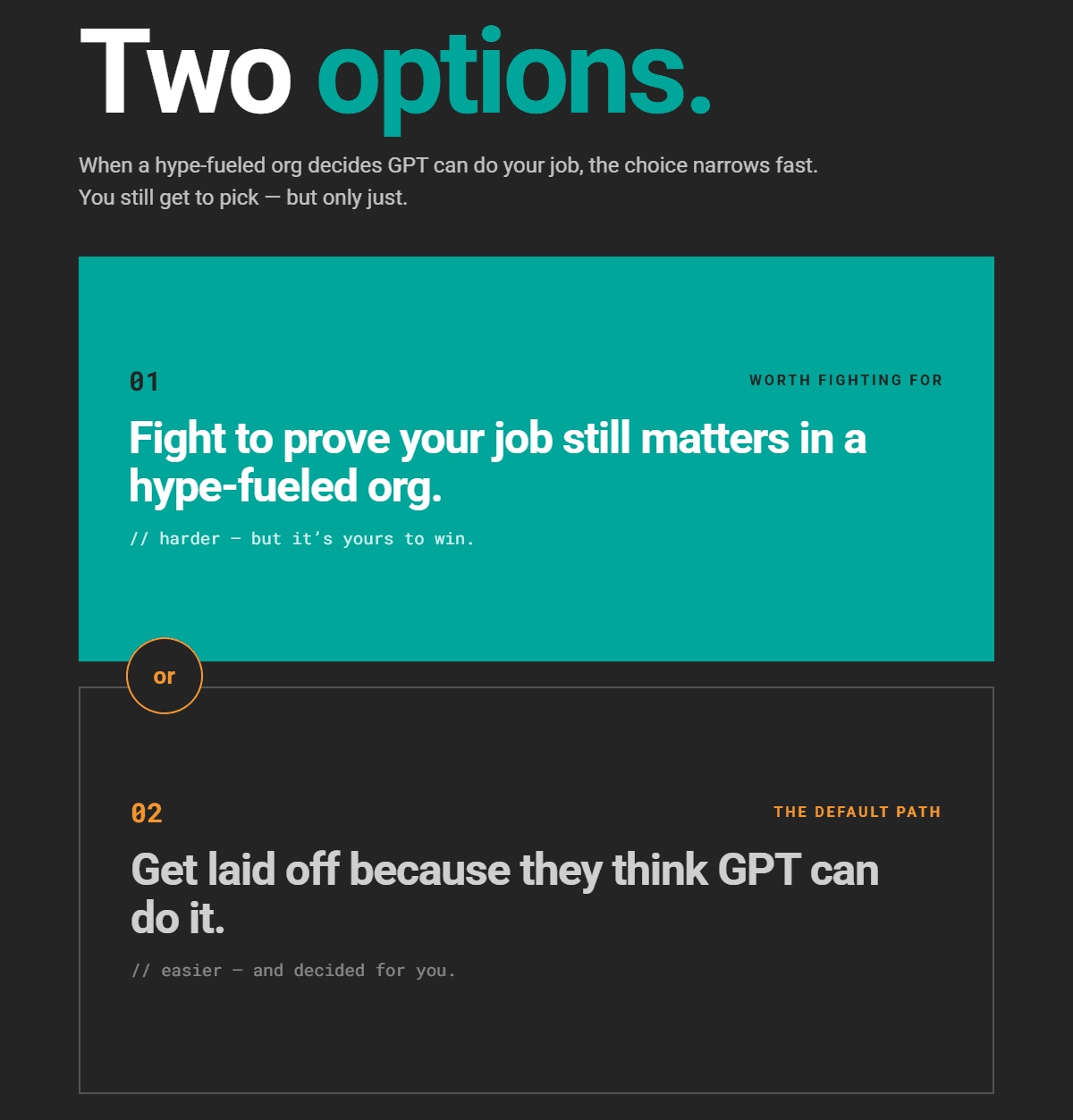
I'd wager you're more interested in the first option. And I think the solution is in redefining productivity.
We Urgently Need to Redefine Productivity
The AI bros and the high priests of capital and efficiency are basically into selling the idea that data science is about writing the fastest script.
Nice try, but it's not. Data science is about understanding the system beneath the data. We need to push back on this reductionist thinking and try to redefine productivity. Not more, not faster, but deeper. This seems to be the only hope for surviving the bubble pop and staying sane.
Here's what you can do and hope for the best.
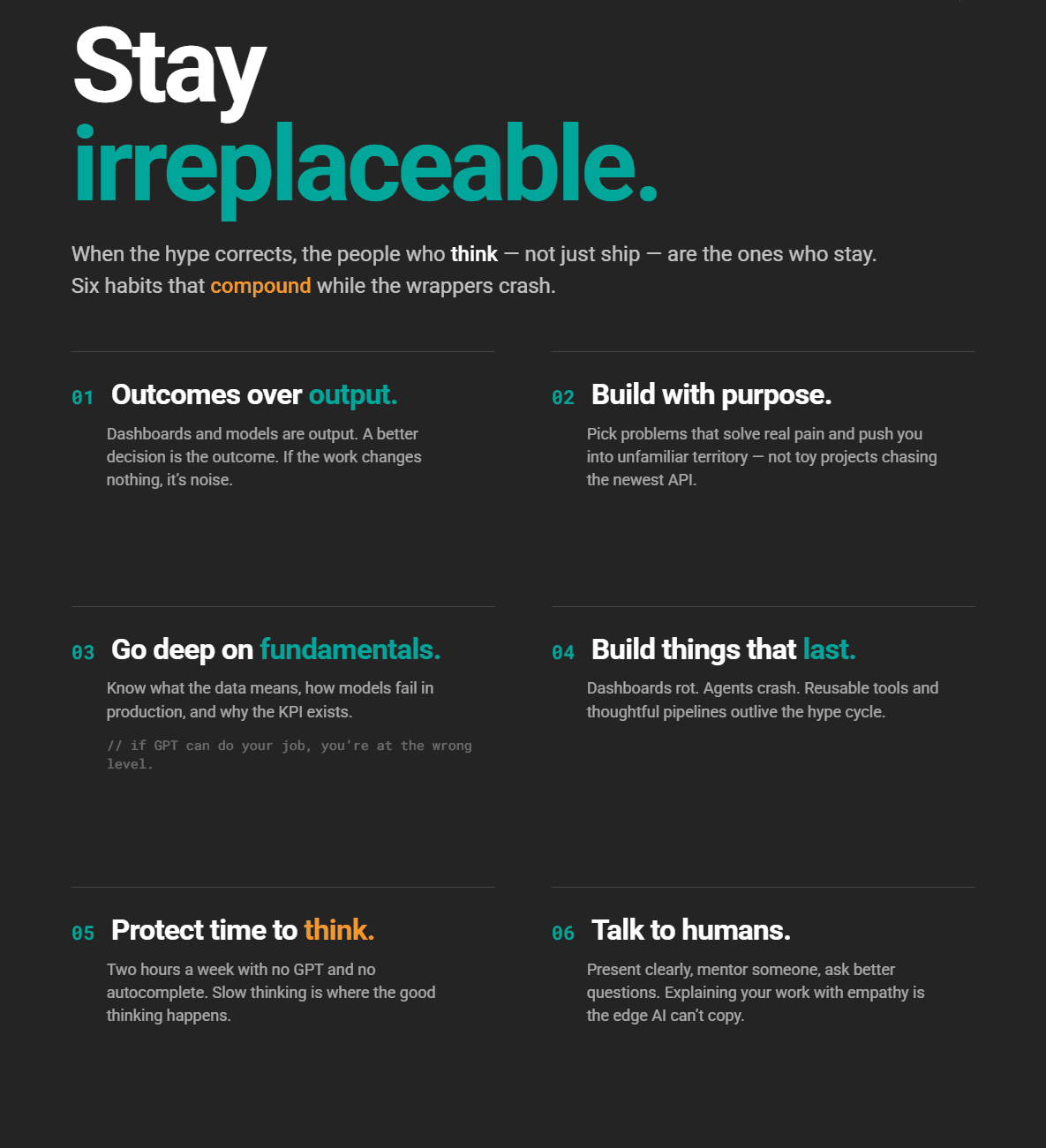
1. Focus on Outcomes, Not Output
Output: dashboards, models, notebooks.
Outcome: “We made a better decision.”
If your work doesn't change something, it's noise.
2. Build With Purpose, Not Panic
Build projects that:
- Solve real-world pain points
- Push you into unfamiliar territory
- Require critical thinking, not just technical fluency
No more chasing toy projects just to use the latest API.
3. Go Deep on Fundamentals
Know:
- What the data actually means
- How models fail in production
- Why the KPI exists in the first place
If GPT can do your job, you’re probably working at the wrong level.
4. Build reusable things
Dashboards rot. Agents crash. But reusable tools and thoughtful pipelines. Those live on.
5. Schedule AI-Free Creation Time
Slow thinking leads to good thinking. Take two hours a week:
- No GPT
- no autocomplete, just you, a problem, and your brain.
Embrace the Luddite in you and don't let technology separate you from the means of production: your thinking, creativity, and problem-solving.
6. Talk to Humans – Often
Don't disappear into your IDE:
- Talk to stakeholders
- Present your work clearly
- Mentor someone
- Ask better questions
The ability to explain your work with empathy is your biggest edge in the AI age.
Conclusion
The AI bubble is real. The crash is happening in slow motion. But if you know how to think, debug, reason, and care, you're not obsolete. You're rare.
The rest? They'll be launching Cryptogpt5.AI now with blockchain synergy and a Slack plugin nobody asked for.
Share